Monetary Policy Visualization
Monetary Regimes
October 19, 2026
Money is often introduced in textbooks as a neutral technical device that solves the inefficiencies of barter — a “medium of exchange” that emerged spontaneously to avoid the problem of a double coincidence of wants.
A (Post-)Keynesian perspective instead treats money as a social and credit relation: money is fundamentally a unit of account for debt, and most money in modern economies exists as IOUs — promises to pay, recorded on balance sheets.
This distinction matters enormously for how we think about who creates money, what limits its creation, and what central banks can and cannot do.
For (Post-)Keynesians, money is above all a way of settling debt obligations in a monetary production economy: firms borrow to produce before they sell, and money bridges this gap between outlays and receipts (Keynes’ finance motive).
Most money in modern economies is not created by central banks printing currency, but by commercial banks when they extend credit.
“Loans create deposits”
When a bank grants a loan, it simultaneously creates a matching deposit on the borrower’s account — a balance sheet expansion, not a transfer of pre-existing funds.
This is the principle of endogenous money: the money supply expands and contracts with the demand for credit in the economy, rather than being fixed exogenously by the central bank.
This overturns the textbook “money multiplier” story, in which the central bank sets the monetary base and banks mechanically multiply it into a fixed volume of loans.
Implication: controlling the growth of the money supply (monetarism) is seen as the key lever to control inflation.
This is often called the horizontalist view — central banks set the price of reserves (the interest rate) and supply whatever quantity of reserves banks need at that rate.
| Question | Neoclassical / mainstream | (Post-)Keynesian |
|---|---|---|
| What is money? | Evolved from barter, ultimately commodity-based | A social/credit relation, unit of account for debt |
| How is money created? | Central bank controls the monetary base; multiplier | Banks create money endogenously via loans |
| Money supply | Exogenous, set by the central bank | Endogenous, demand-determined |
| Central bank tool | Controls quantity of money/reserves | Sets the price (interest rate) of reserves |
| Inflation | “Always and everywhere a monetary phenomenon” (quantity theory) | Driven by costs, distributional conflict, demand pressures |
| Saving & investment | Saving enables investment (loanable funds) | Investment generates the saving needed to finance it |
These theoretical differences are not merely academic — they shape how economists interpret real-world policy:
A monetary regime is the set of institutional rules that govern how money is created, valued and exchanged — both domestically (what anchors the value of money) and internationally (how a currency relates to other currencies).
Key dimensions of a monetary regime:
Under the classical gold standard (roughly 1870s–1914), currencies were pegged to a fixed quantity of gold and freely convertible.
Critique: this mechanism imposed painful deflation and unemployment on deficit countries — a recurring (Post-)Keynesian concern about “external constraints” on domestic policy autonomy.
Since the 1970s, most major currencies float against each other, with values determined by supply and demand in foreign exchange markets rather than by a fixed peg.
This raises the classic “impossible trinity” / trilemma: a country cannot simultaneously have
— it can choose at most two of the three (Mundell-Fleming).
In the 1970s–80s, several central banks (e.g. the Bundesbank, the Fed under Volcker) explicitly targeted the growth rate of the money supply, following the monetarist prescription that controlling money growth controls inflation.
In practice, this proved difficult: the relationship between measured monetary aggregates and inflation was unstable, partly because — as the endogenous money view predicts — the money supply responds to economic activity rather than being a lever fully under the central bank’s control.
The consequence was the Volcker shock: in 1979, the Fed increased interest rates sharply to curb double-digit inflation. The federal funds rate peaked at 20% in 1981, triggering a severe recession and a steep rise in unemployment, but inflation fell from around 13% in 1980 to below 4% by 1983.
Since the 1990s, the dominant regime among major central banks (ECB, Fed, Bank of England, …) has been inflation targeting:
| Regime | Anchor | Exchange rate | Policy autonomy |
|---|---|---|---|
| Gold standard | Gold | Fixed | Very limited |
| Bretton Woods | US dollar / gold | Fixed but adjustable | Moderate (with capital controls) |
| Monetarist money targeting | Money supply growth | Floating | Rule-based, limited discretion |
| Inflation targeting | Inflation rate | Mostly floating | Discretionary, but rule-guided |
| Currency union (e.g. euro area) | Common currency, single central bank | Fixed within the union | None for individual members |
(Post-)Keynesians stress that the choice of regime is never purely technical: each regime distributes policy autonomy and adjustment burdens differently between countries, and between capital and labour.


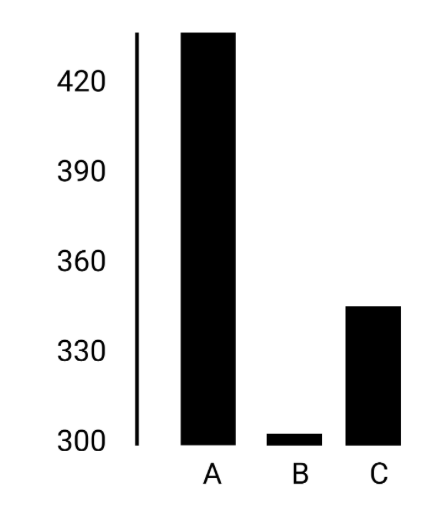
Bad:
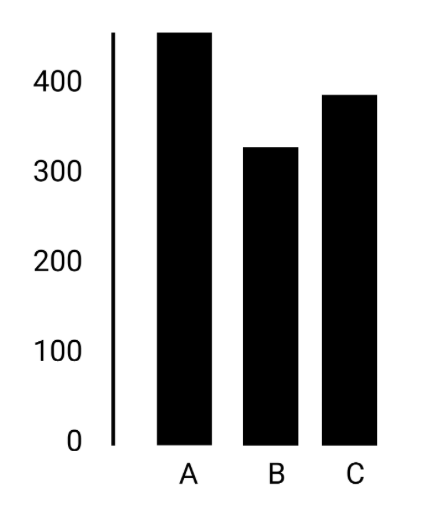
Good: 


Bad:
Good: 


Bad:
Good: 


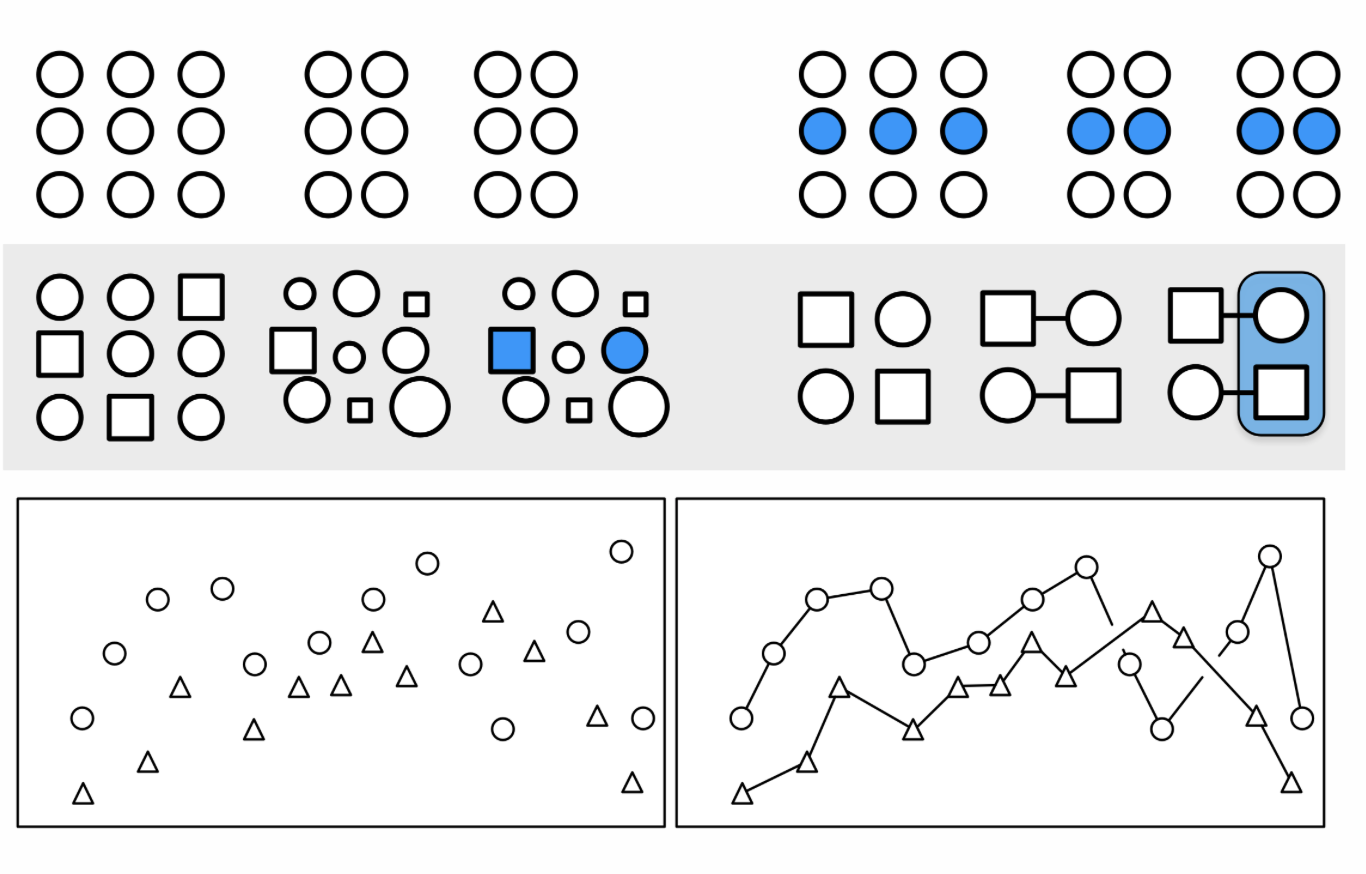
Gestalt Principles describe how humans group similar elements, recognize patterns and simplify complex images. “Gestalt” is German for “unified whole”.
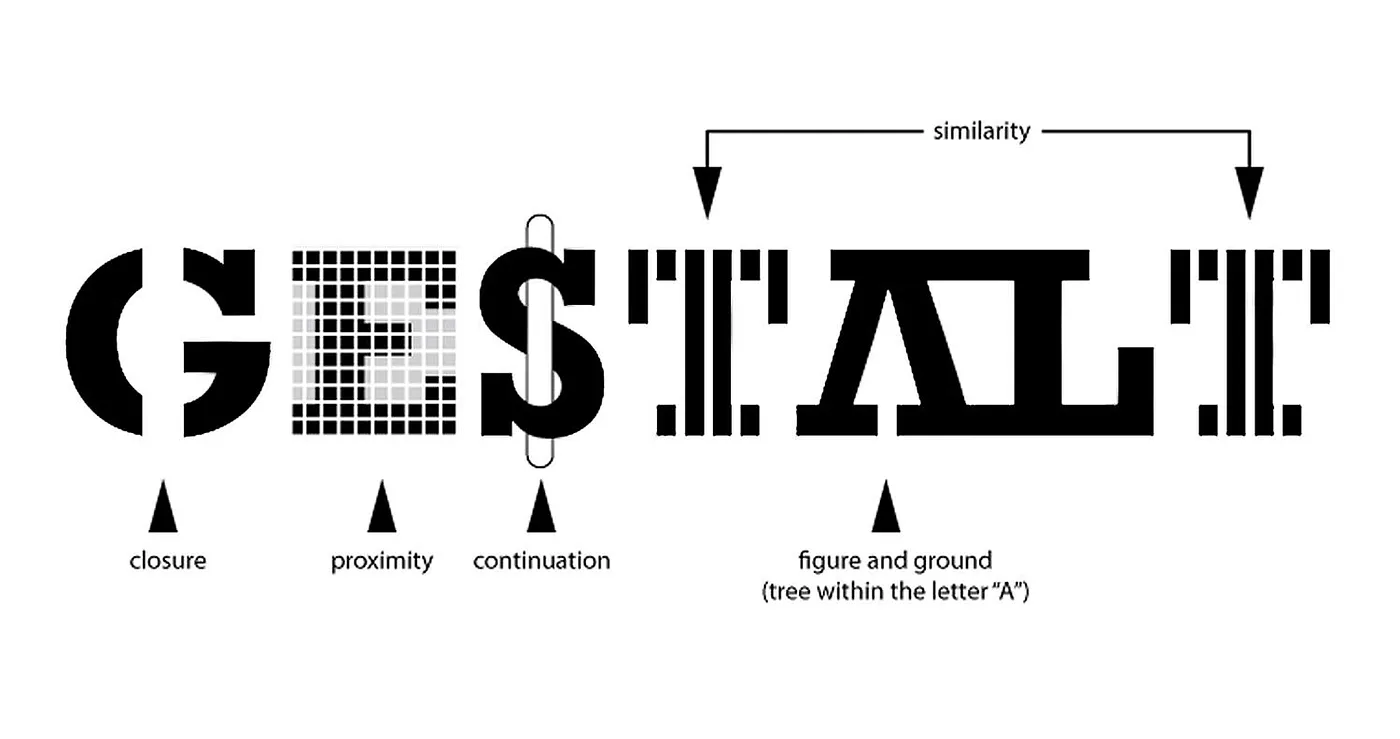
The question is how humans typically gain meaningful perceptions from the chaotic stimuli around them. The idea is that the mind “informs” what the eye sees by perceiving a series of individual elements as a whole.


PI 0588 Economic Policy (Applied track) | Winter term 2026